Research with Respect for Elephants,
Wildlife and the Habitat
Elephant Conservation
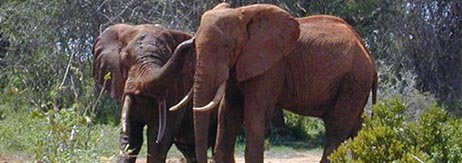
Tsavo elephant research began in 1989, a non-interference field study monitoring the behavior of elephants in Tsavo. The research is based on individually recognized elephants, many of whom I’ve known for 15 + years. Photographic identification of distinct features is used to track each individual: tusks, tail and ears. Three linked databases are maintained to monitor all known individuals: update photographic identification, changes in features, location, habitat, activity, associations and reproductive status: musth cycles, offspring: birth date, sex and survival.
Wildlife Conservation
In addition to elephant conservation, we monitor wildlife that share the Tsavo environment with elephants. Data are collected on species threatened, endangered, rare or located in an atypical area: location, group size and activity.
Habitat Conservation
The study site (4,000 km²), south of Galana River, is one-third of Tsavo East National Park. The habitat is relatively flat terrain with a few hills in the north-eastern region. The vegetation consists of Acacia-Commiphora, open grassland, riverine and bushland with scattered trees. Galana River is the only permanent river. Ashaka, Punda Malia and Sobo are tributaries from the Galana River providing water and vegetation for elephants and other wildlife during the dry season. Voi and Mbololo are seasonal rivers and an important resource during the dry season; food, shade and wells that elephants dig in the dry river bed. Many other wildlife depend on these wells during the dry season. We monitor the status of the habitat: fires, invasive plants; water (rivers, boreholes, dams and lodge waterholes), fences and human activity (encroachment, tourism and poaching).
Research Team
Dr. Barbara McKnight has conducted non-interference behavioral research for 30+ years in Tsavo. She works with many different teams of Kenyan assistants. She and her team studied elephant behavior on private land adjacent to Tsavo to determine temporal-spatial distribution and movements of known individuals between the National Park and private land. Barbaras main focus is on bull social dynamics and bonds. She has studied the behaviors of whales and dolphins, off the coast of California. She worked for two years in Ethiopia with the Peace Corps. Barbara received her Ph.D. and M.Sc. from the University of Oxford, UK.