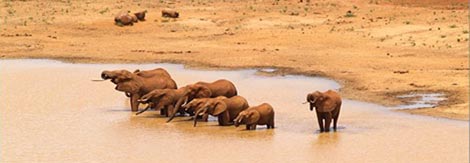
Tsavo History
Many of the 40-50-year-old elephants in Tsavo lived through droughts, legal hunting, poaching and changes in the Tsavo habitat. Knowing the history of the region assists in understanding an elephants' behavior.
Tsavo National Park was created in 1948, the largest protected area in Kenya. The park occupies half of the entire Tsavo region that the elephant population utilized. Kenya banned elephant trophy hunting in 1977. Before this ban there were numerous elephant ivory hunting blocks surrounding the National Park. Many of the largest tusks in Kenya were taken from the Tsavo elephants.
Elephants
In the late 1960s, there were approximately 35,000 elephants in the Tsavo region. The population has suffered two population crashes. The first was the drought in the early 1970s when an estimated 6,000 individuals died and over the next four years with low rainfall and lack of vegetation weakened females and young elephants died. Unlike females and their young offspring, independent bulls were able to travel great distances in search of vegetation and their mortality was lower.
The second crash was due to illegal killing of elephants for their tusks. The large bulls that survived the drought were the first victims for their large, heavy tusks. The large females were the next victims (their calves died as a result) and entire families were killed. By the late 1980s at the height of the poaching era, about 6,200 elephants remained in the entire Tsavo Region.
Elephant Range
Aerial surveys in the mid 1960s-1970s showed that the majority of the groups were confined within the National Park. With the onset of the rains these groups dispersed, but there was little indication of large-scale migration. Elephant seasonal range was influenced by the surrounding legal hunting blocks, rainfall and the development of numerous supplemental water sources within the National Park.